Market Failure Definition Economics Simple Understanding
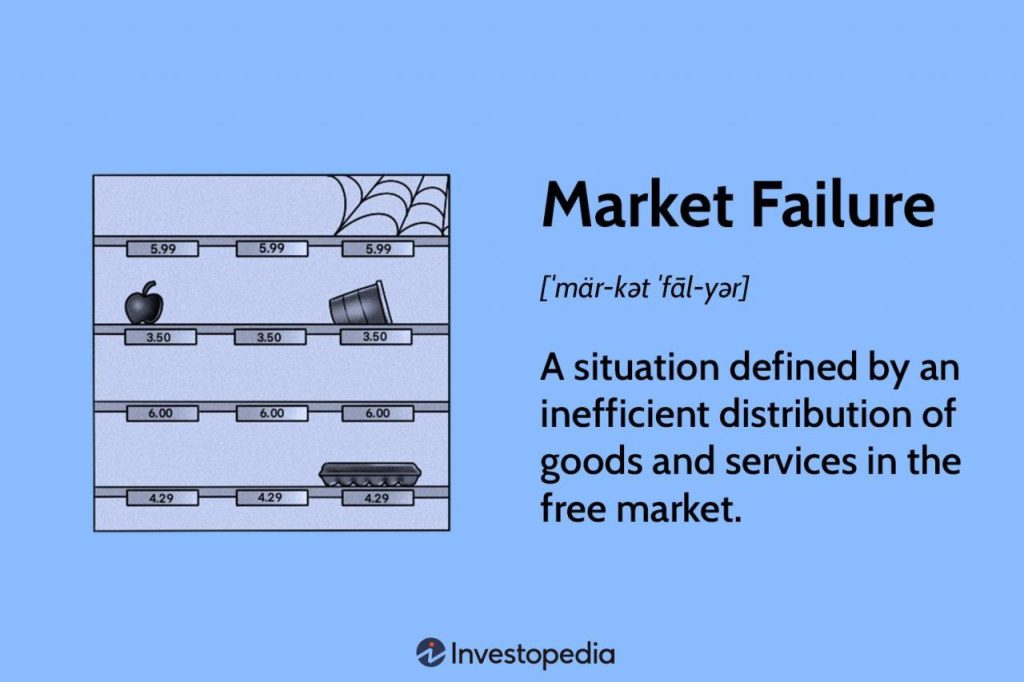
Market failure definition economics simple is a concept that holds immense significance in understanding how economies operate. Essentially, it refers to situations where free markets fail to allocate resources efficiently, leading to a variety of social and economic issues. Grasping this concept not only sheds light on the reasons behind certain market behaviors but also highlights the vital role of government intervention in correcting these failures.
From public goods to externalities, the intricacies of market failure are woven into the fabric of our economy. Whether it’s the monopolistic practices that stifle competition or the hidden information that creates imbalances, exploring these aspects reveals the complexities at play in economic systems.
Market Failure: An Overview
Market failure occurs when the allocation of goods and services by a free market is not efficient. In simple terms, it means that the market fails to produce the right amount of a product or service, leading to a situation where resources are not utilized optimally. Understanding market failure is crucial in economics because it highlights the limitations of market systems and the need for intervention to correct inefficiencies.
Real-world examples of market failure include pollution, where the costs of environmental damage are not reflected in the price of goods, and public goods like national defense, which the market may under-provide. These failures can lead to significant negative impacts on society, such as health issues, social inequality, and economic instability.
Causes of Market Failure
Several key factors contribute to market failure, and understanding these causes helps in identifying appropriate solutions. The main causes include:
- Externalities: These arise when the actions of individuals or businesses have side effects on third parties not involved in a transaction. For instance, a factory emitting pollution affects the health of nearby residents, creating costs that are not borne by the factory owner.
- Public Goods: These are goods that are non-excludable and non-rivalrous, meaning that one person's use does not diminish another's ability to use it. Examples include street lighting and national defense, which often lead to under-provision by the market.
- Imperfect Competition: This occurs when markets are dominated by a few firms, leading to monopolies or oligopolies where prices are higher and output is lower than in competitive markets.
- Asymmetric Information: This situation arises when one party in a transaction has more or better information than the other. For example, used car sales often feature sellers who know much more about the vehicle's condition than buyers, leading to market inefficiencies.
Types of Market Failure
Market failures can be classified into several distinct types, each with unique characteristics and implications:
- Monopolies: A monopoly exists when a single company or entity dominates a market, controlling prices and supply. This lack of competition can lead to higher prices and reduced innovation.
- Public Goods Failure: When public goods are underprovided, it leads to issues such as inadequate infrastructure or insufficient public health services.
- Externalities: Negative externalities like pollution can lead to harmful societal impacts, while positive externalities, such as education, often result in under-investment.
- Asymmetric Information: The consequences of asymmetric information can result in market breakdowns, like the market for "lemons" in used cars, where poor-quality vehicles drive out good quality ones.
Economic Theories Related to Market Failure
Several economic theories provide insights into the reasons behind market failure:
- Classical Economics: This perspective suggests that markets are generally efficient but can experience failures due to externalities or market power.
- Keynesian Economics: Keynesians argue that active government intervention is necessary to stabilize the economy and address market failures, particularly during recessions.
- Behavioral Economics: This approach examines how psychological factors and cognitive biases can lead to irrational decisions, contributing to market failures.
Government Intervention in Market Failures
Governments often step in to correct market failures through various policies:
- Regulatory Approaches: This includes environmental regulations to limit pollution or antitrust laws to promote competition.
- Market-Based Solutions: Tools like taxes on negative externalities (e.g., carbon taxes) can create incentives for businesses to reduce harmful behaviors.
- Subsidies: These can encourage the production of public goods or address concerns such as underinvestment in education or healthcare.
Case studies of government interventions show successful outcomes, such as the Clean Air Act in the United States, which significantly reduced air pollution and improved public health.
Implications of Market Failure
Persistent market failures can have long-term economic implications, including:
- Economic Inequality: Market failures can exacerbate inequality, with certain groups gaining disproportionate benefits while others suffer.
- Sectoral Impact: Different sectors of the economy, such as healthcare or education, may experience diminished investments and innovation.
- Consumer Welfare: Ultimately, market failures can lead to reduced consumer choice and higher prices, negatively affecting overall welfare.
Solutions to Market Failure
Addressing market failures requires a comprehensive strategy that includes:
- Policy Frameworks: Creating clear guidelines for intervention based on empirical evidence and economic theory.
- Innovation and Technology: Encouraging innovative solutions that can alleviate market failures, such as platforms for sharing resources to improve public goods.
- Community Engagement: Involving local communities in decision-making can lead to more effective and tailored solutions that address specific market failures.
Last Recap
In summary, understanding market failure definition economics simple provides invaluable insights into the challenges and opportunities within economic structures. By recognizing the causes, types, and implications of market failures, we can better appreciate the importance of effective government policies and innovative solutions in fostering a more efficient and equitable economy.
Query Resolution
What is market failure?
Market failure occurs when free markets fail to allocate resources efficiently, resulting in negative outcomes for society.
What are some common causes of market failure?
Common causes include externalities, public goods, monopolies, and asymmetric information.
How can government intervention help with market failure?
Government intervention can help correct market failures through regulation, provision of public goods, and policies aimed at reducing negative externalities.
What are externalities?
Externalities are costs or benefits incurred by third parties not involved in a transaction, often leading to market inefficiencies.
Why is understanding market failure important?
Understanding market failure is crucial for developing effective policies and solutions to enhance economic performance and social welfare.